Web Developer in the AI Era: Is the Career Still Worth It?
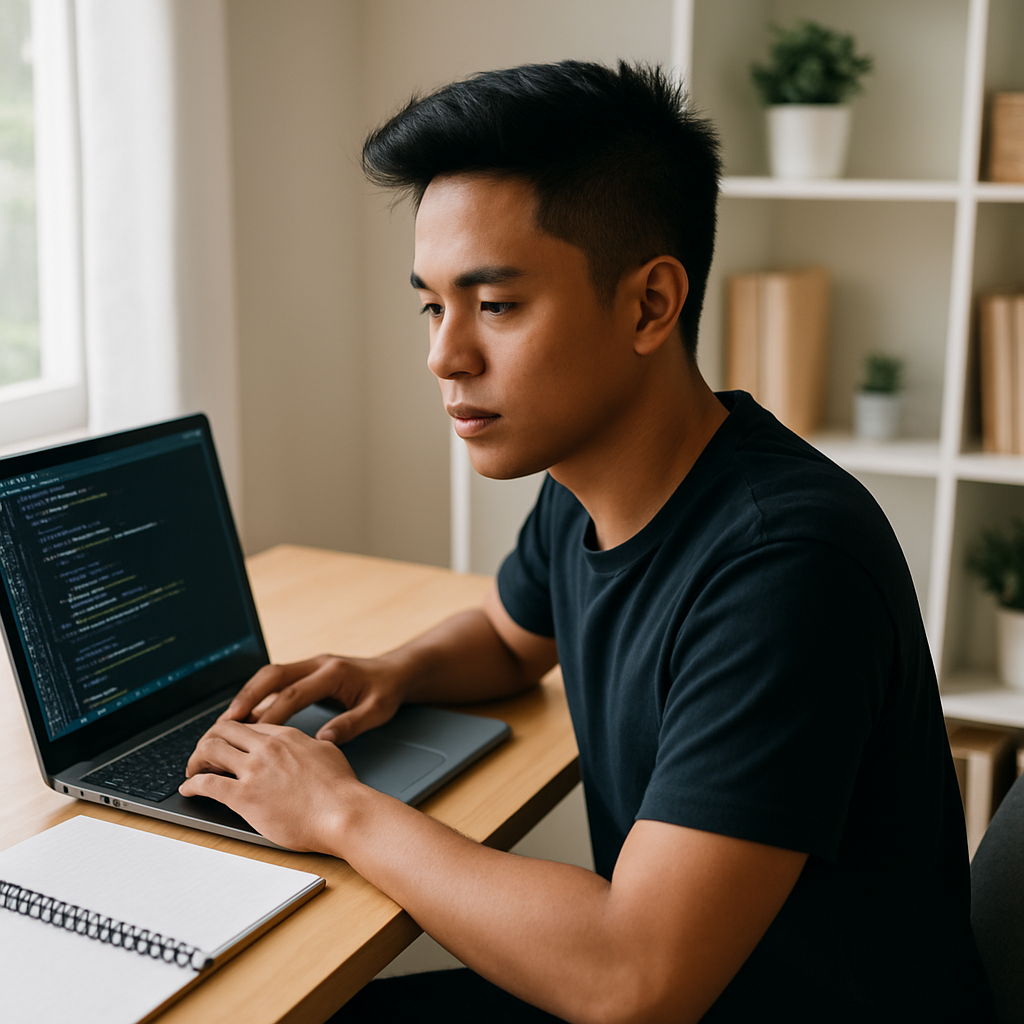
Yes, web development is still a solid career path in the Philippines, even with artificial intelligence writing code. A strong website and portfolio, plus working knowledge of AI-assisted coding, now matter more than a diploma alone.
Employers filter for people who can direct AI tools, not just people who can type syntax from memory. Fresh IT graduates who understand that shift — and build a real portfolio website to prove it — are the ones landing interviews.
Key Takeaways
- AI tools like GitHub Copilot and Lovable speed up coding, but they don't replace developers who understand architecture, debugging, and client needs.
- A live portfolio website is now the baseline expectation for junior developer applications in the Philippines, not a nice-to-have.
- Local demand for web developers remains strong, especially in Metro Manila, Cebu, and remote-first BPO-IT hybrid roles serving Australian and US clients.
- Fresh graduates who pair AI fluency with fundamentals (HTML, CSS, JavaScript, databases) land interviews faster than those who rely on AI output blindly.
- Building 3-5 varied projects — not one — is what actually gets recruiters to respond.
The Current State of Web Development in the Philippines

Web development hiring in the Philippines hasn't shrunk because of artificial intelligence — it's changed shape. Companies still need people to build websites, fix bugs, and maintain systems. What's changed is how that work gets done and who gets picked for entry-level roles.
Why AI Hasn't Replaced Junior Developers
AI coding assistants can generate a working landing page in minutes. Tools like Lovable and Figma Make can even scaffold a portfolio site from a short prompt. But someone still has to decide what the site should do, connect it to a real backend, handle edge cases, and fix what the AI gets wrong. That's the part employers are hiring for.
Recruiters in Metro Manila and Cebu report the same pattern: candidates who can only follow AI-generated code without understanding it struggle in technical interviews. Candidates who know why the code works — and can explain trade-offs — get offers.
Key insight: AI tools raise the floor for what a beginner can build, but they raise the bar for what employers expect a junior developer to understand.
What Changed for Fresh Graduates
A few years ago, a fresh graduate could get hired mostly on academic projects and a CV. That's no longer enough on its own. Now, hiring managers expect:
- A live portfolio site with your own domain, not just a GitHub repository link.
- At least one project involving a real database, authentication, or a third-party API.
- Some visible use of AI tools in your workflow — automation, code review, or rapid prototyping.
- Basic understanding of deployment (hosting, CI/CD basics) rather than only local development.
This is a higher bar than five years ago, but it's also more achievable. AI tools mean you can build more, faster, as a student — there's less excuse for an empty portfolio at graduation.
How AI Tools Are Reshaping the Web Developer's Day-to-Day
Understanding what artificial intelligence actually does for a working developer helps you decide where to invest your learning time.
| Task | Before AI tools | With AI tools today | What still needs a human |
|---|---|---|---|
| Writing boilerplate code | Manual typing, copy-paste from old projects | Generated in seconds via Copilot or ChatGPT | Reviewing for security and correctness |
| UI/UX layout | Hand-coded CSS, trial and error | AI-generated layouts from a text prompt (Lovable, Figma Make) | Adjusting for brand, accessibility, real content |
| Debugging | Manual log tracing, Stack Overflow searches | AI suggests likely fixes instantly | Confirming the fix doesn't break something else |
| Documentation | Written manually, often skipped | Auto-generated drafts from code comments | Keeping it accurate as code changes |
| Testing | Manually written test cases | AI can draft test cases from specs | Deciding what actually needs testing |
The pattern is consistent: AI removes repetitive, well-defined work. It doesn't remove judgement. That's exactly the skill fresh graduates need to demonstrate.
Where Filipino Developers Have an Edge
The Philippines has a long-established reputation in IT-BPM and outsourced software work, built over two decades of serving Australian, US, and European clients. That trust doesn't disappear because artificial intelligence exists — if anything, clients abroad now want developers who can use AI tools to deliver faster without sacrificing quality. English fluency, strong client communication, and time-zone flexibility remain real advantages for Filipino developers competing for remote roles.
Why a Portfolio Website Matters More Than Ever
A portfolio website is the single most persuasive asset a fresh graduate can bring to a job search. It does three things a CV can't: it proves you can ship a live product, it shows your design sense, and it lets recruiters click through real, working links instead of trusting a bullet point.
What a Strong Junior Portfolio Should Contain
Look at how experienced developers structure their own sites. A well-built portfolio typically includes a homepage introducing who you are, a dedicated projects or "work" page, individual case study pages per project, and a blog or notes section that shows ongoing learning. For example, Jilian Garette's developer portfolio follows this structure — a homepage, a projects page, and individual write-ups for builds like a finance tracker and a quiz platform — which gives recruiters a clear, scannable trail of real, deployed work rather than a static list of skills.
Each project write-up should answer three questions quickly: what problem did it solve, what tech did you use, and what did you personally build or decide. Recruiters skim. Make it easy for them to see your thinking, not just your output.
Portfolio Mistakes That Cost Fresh Graduates Interviews
| Mistake | Why it hurts you | Fix |
|---|---|---|
| Only listing tech stack, no live demo link | Recruiter can't verify your claims | Deploy every project, even on a free host |
| One big project, nothing else | Looks like a one-off, not a repeatable skill | Show 3-5 varied projects (frontend, backend, integration) |
| Copying a template with no customisation | Signals low effort, blends into hundreds of similar sites | Adjust layout, copy, and structure to reflect your voice |
| No mention of AI tools used | Misses a chance to show current workflow | Note where you used AI for speed, and what you reviewed manually |
| Broken links or unfinished pages | Undermines trust instantly | Test every link before sharing the URL |
Key insight: A portfolio with three finished, working projects beats one with ten half-built repositories — recruiters judge follow-through, not volume.
Skills That Matter Most Right Now
Fresh graduates often ask which languages or frameworks to prioritise. The honest answer: fundamentals first, frameworks second, AI fluency running alongside both.
Technical Fundamentals Still Non-Negotiable
- HTML, CSS, and JavaScript — the foundation every framework sits on top of.
- A backend language — Node.js, Python, or PHP are all common in Philippine job listings.
- Databases — basic SQL, plus familiarity with at least one NoSQL option.
- Version control — Git and GitHub, used properly with meaningful commit messages.
- Deployment basics — knowing how to get a project live, not just running it locally.
AI-Era Skills to Add On Top
- Prompting AI coding assistants effectively, and knowing when not to trust their output.
- Reviewing and debugging AI-generated code line by line.
- Basic understanding of API integrations, since many modern projects (chatbots, automation, AI-enhanced apps) depend on connecting to external AI services.
- Comfort building small automation projects — email automation, data syncing, or AI-assisted profile tools are increasingly common portfolio pieces that show applied, not theoretical, skill.
Should You Learn to Code Manually If AI Can Write It For You?
Yes. This is the honest answer, and it matters for how you plan your first year of learning.
AI-generated code fails, hallucinates dependencies, or produces insecure patterns often enough that someone needs to catch it. If you can't read the code, you can't catch the mistake. Employers test for this directly in technical interviews — expect live coding exercises, code review tasks, or "explain what this does" questions that AI can't answer for you in real time.
Treat AI tools the way a senior developer treats a junior pair programmer: useful for speed, never trusted blindly. Learn the fundamentals properly first, then layer AI tools on top to move faster. Skipping straight to AI-only workflows tends to produce developers who can't pass a technical screening, according to hiring feedback commonly reported across Philippine tech job boards and LinkedIn discussions among design and dev professionals.
Frequently Asked Questions
Is web development still a good career choice in the Philippines in 2026?
Yes. Demand for web developers remains steady across local startups, outsourcing firms, and remote roles serving overseas clients. The job itself has evolved to include AI tool fluency, but the core need — people who can build and maintain websites and web apps — hasn't gone away.
Will AI eventually replace web developers entirely?
Unlikely in the near term. AI tools handle repetitive coding tasks well but still need human direction, review, and judgement about business needs, security, and user experience. Most industry discussion points toward AI changing the role rather than eliminating it.
What should a fresh IT graduate's portfolio website include?
At minimum: a clear homepage stating who you are and what you do, a projects page with 3-5 live, deployed builds, individual case studies explaining your role in each project, and a way to contact you. A blog section showing ongoing learning is a strong bonus.
How many projects should be on a junior developer's portfolio?
Three to five well-finished, varied projects work better than a long list of unfinished ones. Include at least one project with a real backend or database, and one that shows integration with an external API or AI tool.
Do I need to know AI tools to get hired as a web developer now?
You don't need to be an AI specialist, but you should be comfortable using coding assistants like GitHub Copilot or ChatGPT for drafting code, and able to explain how you review and correct their output. Many employers now ask about this directly in interviews.
What programming languages should I learn first?
Start with HTML, CSS, and JavaScript, since they're the foundation for almost everything on the web. Add a backend language such as Node.js, Python, or PHP once you're comfortable with the frontend basics, then move into a framework relevant to job listings you're targeting.
How do I make my portfolio stand out from other fresh graduates?
Customise the design instead of using a generic template, write short case studies explaining your decisions on each project, and deploy everything so recruiters can click through live demos. Mentioning how you used AI tools responsibly in your workflow also helps you stand out, since it shows current, practical skill rather than only classroom knowledge.
Build the One Thing Recruiters Actually Check First
Start with your portfolio site. Pick three of your strongest projects, deploy them properly, and write a short case study for each explaining the problem, your tech choices, and what you built yourself versus what AI tools helped generate. That single asset will do more for your job search than another certificate.
Resources / References
- Philippine Statistics Authority — official labour force and employment statistics for the IT-BPM and related sectors URL: https://psa.gov.ph
- Department of Information and Communications Technology (DICT) Philippines — government policy and industry data on the Philippine ICT sector URL: https://dict.gov.ph